Dryobalanops Aromatica is the right tree for Propagation and Reforestation because of its many useful contributions such as Carbon Reduction, Building the Local Economy, and Improving Socioeconomic Development in Indonesia.
.png)
The Dryobalanops aromatica, known as the Borneo Camphor, has been grown in natural forests, since the 7th century and became an International trade icon at that time. It is native to the Sumatra and Borneo islands and was originally found grown in forests.
Due to large exploitation and illegal logging, the existence of Dryobalanops in Indonesia’s natural forest is increasingly threatened. The IUCN has categorized D. sumatrenesis as VULNERABLE (Vulnerable A2cd) since 2018. In-situ and ex-situ conservation efforts must be made to maintain the existence of the species.

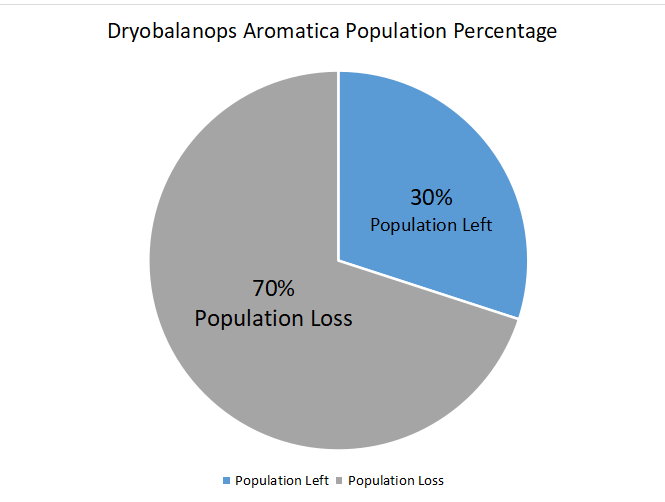
Identified over the years!
9 Families, 268 Species including Dryobalanops (1991)
7 Types of Dryobalanops in Kalimantan (2004)
2 Types of Dryobalanps in Sumatra (2004)
Building Local Economy
Camphor woods are known to be highly resistant to termites. This makes the material more durable for furniture and housing.
Camphor trees' Branches and Leaves produce a soothing fragrance. They can be turned into essential oils.
Borneol, a product of the camphor tree is a core element in herbal medicine. They can help with digestion and circulation.